Thursday, January 12, 2023

4 Simple Ways to Support Neurodivergent Students in the Classroom #EdChat #SpEd

 There are many teachers out there that want to support the neurodivergent students in their classroom, but are unsure of where to start. It can feel overwhelming to think about the number of students who need the support, but there are a few things you can do to help them be successful in the classroom. 

1. Provide Accommodations

Some neurodivergent students have accommodations already in place and some students do not have any because they have slipped through the cracks of the system. There are many other reasons why the student might not have a set list of supports in place, but that doesn't mean you can't offer help. Find the support options that work best for these students. Some students might need an extra day to complete an assignment. Others will struggle to stay organized and need an extra hand at the end of the day. It can be overwhelming, but it is important to follow IEP and 504 documents for students who have set accommodations and to keep an eye out for students who could also benefit from support who are not identified in the system. 

2. Structure the Environment

One of the things that I have found that really helped my neurodivergent students was the way that I provided the assignments. I made sure everything was written on the board or on the website, I provided the directions verbally at least twice, and then I checked in with students who might need personal directions to help them get started. I make sure to get out in front of potential communication issues by making sure the assignment can be found anywhere a student might look. Also, I make sure to move about the room and redirect students as needed. 

3. Educate Yourself

Sometimes professional development offered by your school does not meet your needs or the needs of your students. It is important to find helpful resources to support your understanding of the changing pedagogical practices to support all students. Diving into Google and searching for specific content resources is one approach. There are many resources out there that provide information on supporting neurodiverse students. Here is one I found with a quick internet search. An article here and there can really help students in your classroom if you are committed to supporting students who do not conform to the typical student learning profile. 

4. Support Student Self-Advocacy 

This will be one of the toughest things to make happen in the classroom because not all students are in the same place in dealing with their own neurodiversity. Asking a student who deals with generalized anxiety to advocate for themself to the teacher is not going to happen overnight. It is going to take time and many, many, reminders. As the classroom teacher, it is our job, hopefully with the help of support staff and the family, to build up the capacity of the student to self-advocate. There are going to be plenty of instances where the student does not speak up about needing more time or extra help. The struggle will be very real for the student, but patience is key in helping them grow and develop the skills they need to be successful.

Supporting Neurodivergent students in the classroom is no small task. There are going to be days where you are too busy to provide that little extra nudge to get a student moving in the right direction. There will be days where it feels like a student requires all of your attention in class to stay on task. This is all very normal. I like to view the support of all students, but most especially neurodivergent students, as a marathon instead of a sprint. Much like the students, we will stumble in our efforts to support them, but we must get back up and try to make the next day better. 


Monday, January 9, 2023

Exploring Creativity In The Classroom #MakerEd #EdChat

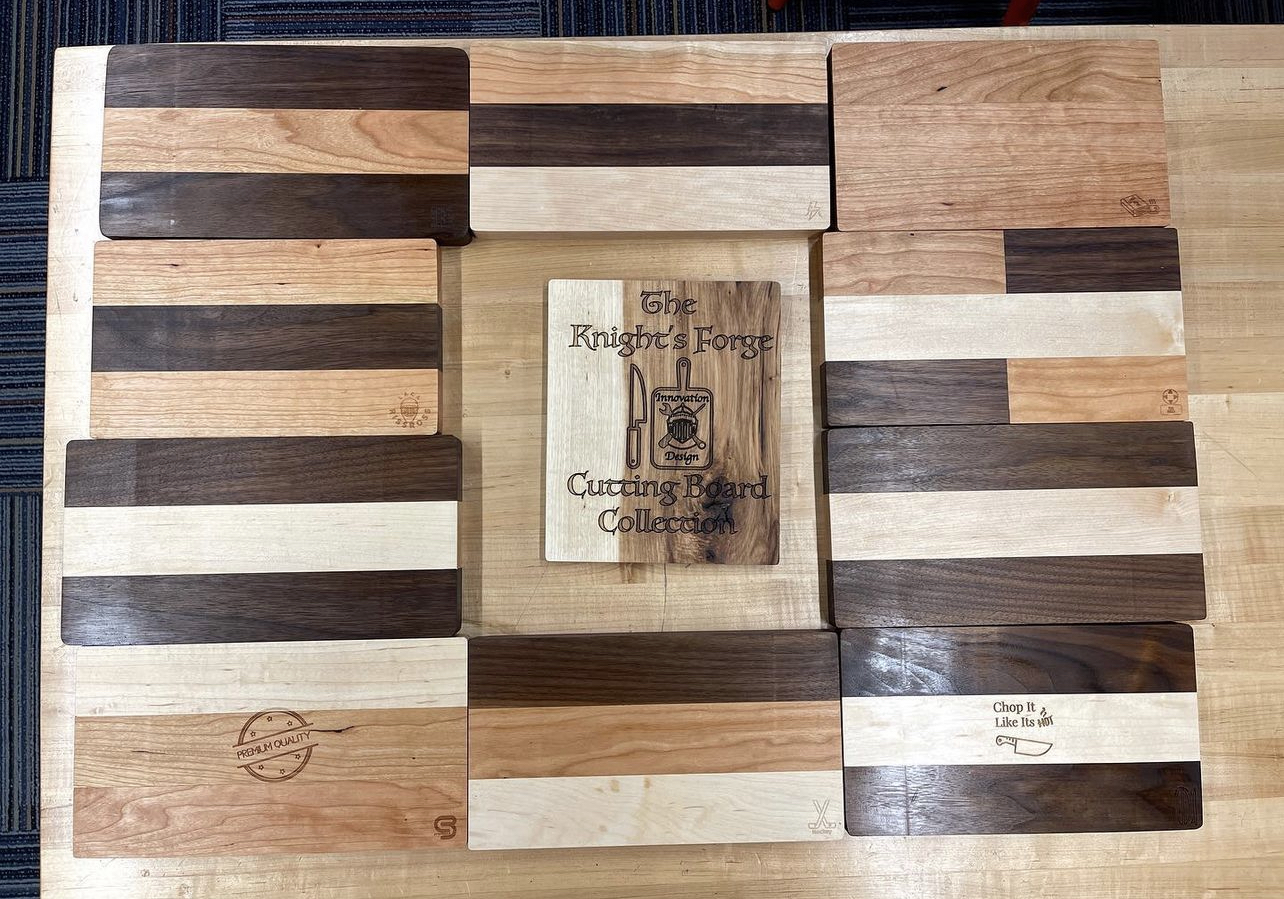
This school year has been an important year for creativity for me and for my students. I really wanted to give them more ownership of the projects they would be creating. So far, I have seen some great examples of creative problem solving and increased engagement from my students. Here are just a few images of their work this year in the Makerspace. 

There are a few reasons I think you should explore allowing more creativity in your classroom based on what I have seen the past few years in my classes and classes of teachers who have focused on allowing more creativity in the classroom through MakerEd and Project Based Learning. 

1. Creativity supports the love of learning. It is so crucial that we get students to see learning as something that is valuable and to love doing it. You do that my letting learning look differently than the standard sit and get many classrooms have come to embrace. Sometimes students are going to need to sit and listen to information, but there are plenty of opportunities that should allow for students to explore and create. Those moments need to be embraced in the classroom because those are the memories that will be created that support a life-long love of learning. 

2. Bringing creativity into the classroom support critical thinking and problem solving skills. Students that dive into creative exploits often find their original creative idea might not work as imagined. This forces them to problem solve. I saw this with the clock assignment in my Innovation and Design class. Many students had wild ideas on creating clocks and were forced to explore their designs and solve problems when their sketched design was having trouble coming to life. The more students are tasked with exploring problems and creating solutions, the better they will be moving forward. Critical thinking and problem solving are muscles that need to be worked out in all classes from time to time. 

3. I have seen that creativity supports communication and collaboration. When it comes to creative projects, students have lots of ideas. When working in groups on creative projects, students will need to work on their communication skills as they explain their ideas and work on compromises. In the middle school, students are developing these important skills and creative projects are a great way to engage them to support these soft skills. Even if the students are not working on groups, having students work on creative projects gets them excited to share their work and get feedback. That back and forth over a project is also great for students as they learn to give and receive constructive feedback to support their peers. 

4. Creativity is great for boosting the confidence of students. So many students feel like what they are good at is not important in school. Givings students a chance to shine in different ways in the classroom can help boost their self-esteem. Giving students a chance to write a song, build something in Minecraft. paint a picture, or some other creative outlet instead of a worksheet or essay could be a great way to see what students know while giving them a platform to showcase their creativity. Over the years I have had students tell me my encouragement of their art, writing, singing, and other creative talents helped them feel seen in class as more than student in a desk. Those are the moments that remind me that the work outside of the curriculum is so vital. 

I could go on and on about the value of creativity in the classroom, but I will pause with these four reasons for now. If you are new to this idea, please do not be overwhelmed. Take it one step at a time with one lesson at a time. Bringing creativity into the classroom was something that took me time to get just right. You can do it at your pace and the students will forever be thankful for it. 

Hugs and High Fives, 

The Nerdy Teacher

Thursday, January 5, 2023

Be Brave #EdChat


The new year will bring new challenges and this song is going to be one of my many anthems to help me be successful. For all of the educators out there that are feeling run down and are not sure what is next, sometimes, the only thing we can do is be brave, speak up, and do what is best. 

I encourage you to be brave and try that new project or switch some lessons around like you have always wanted. There is a chance you will fail and that is ok. Failure is part of being brave. I might not know you, but I believe in you. You can do it. Be brave. 

The best things in life are hard and being brave is the first step in making change. I hope all of you out there can make the changes you want for 2023 and know you are not alone. An entire community of educators are out there that will help if you are struggling. 

Sending you the biggest hugs and high fives!

Bravely, 

The Nerdy Teacher

Wednesday, December 14, 2022

A Cutting Board Education #EdChat #MakerEd

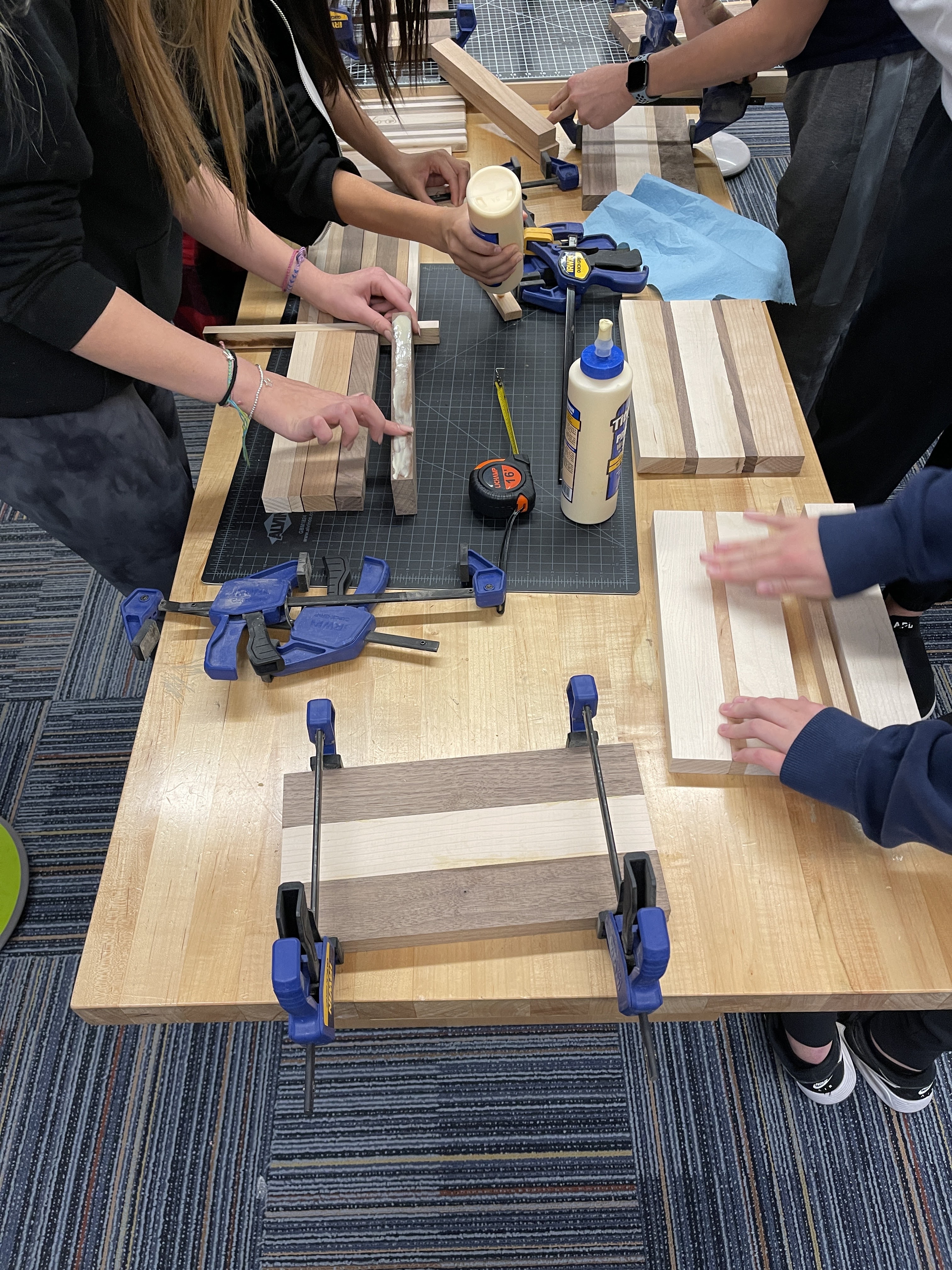
One of the goals for my Level 2 Design class for the 7th and 8th graders was to get them building with their hands. I wanted students to design, measure, cut, and build. One of the easiest ways to do this is through making cutting boards. When it comes to woodworking projects, this is a great beginner project that has kids leave with something they have created and can give away as a gift. Here are some of the highlights of the process. 

Students select their pieces, glue them together, and clamp them in place. What is nice here is that I have a variety of sizes of the wood strips so students can choose a design that works for them. The catch is that the overall board cannot be over 6.5 inches in width. Any wider, and the clamps will not fit. These middle schools will need to work on their measuring and addition skills to make sure the design they want fits in the size constraints. 

Once all of the boards have dried, a couple of students volunteered to help trim the boards. It is another math problem for the students to figure out how much do they need to trim without shrinking the board beyond 11 inches in length. Students then sand the board for a bit with 120 grit sanding block to get rid of any rough edges. 

Next, students will use cutting board oil to seal the boards and make them food safe for use. Students need to measure the correct amount to use for the board. Once the boards are oiled, the students wait for it to dry and can take it home the next day. 

For this projects, students are using a mitre saw, planer, glue, and some boards I ordered from Amazon. People ask me what do students learn in a Maker focused class and there are different answers for different projects. When it comes to cutting boards, students are using those math skills they have learned over the years and are also learning some basic principles of design and building. 

This is a project that I think would be an amazing addition to a math class exploring geometry. It would take some prep on the teacher's part, but it could be a fun project that gets kids thinking about shapes in a different fashion. 

This is not for everyone, but I though I would share for those looking for something different. 


Hugs and High Fives, 

N Provenzano