Wednesday, December 5, 2012

#NerdyCast Episode 8 - #The EduBroAwards #ChatChat


I am excited to bring you #NerdyCast Episode 8 with special guest Tim Gwynn (@TGwynn).


The Awards will be announced on Tuesday December 11 during a Google Hangout. We cannot wait to see all of you there. 


Sunday, December 2, 2012

The #EduBroAwards Update - Nominations Close Friday!

The EduBros would like to thank everyone for all of their support. At the moment of this post being written, there are 69 comments. We are tempted to close the comment portion of the nominations, but have decided to chuckle like little children and leave it open until Friday.

We have had so many great nominations we can't wait until the very secretive voting process to determine to the winners of the first ever #EduBroAwards.

Please get your comments in to the original post here and make your nominations for the world to see.

After Friday, we will sift through all of the nominations, pass out or ballots to a select group of educators and Nick and Tim will host a Google hangout to announce the winners.

At the minimum, we hope you will take a moment and nominate yourself for an award because we know you deserve something.

Good luck!


Saturday, December 1, 2012

All Teachers Should Play Dungeons and Dragons Before Entering A Classroom #edchat

Hello, my name is Nick and I played Dungeons and Dragons growing up. 


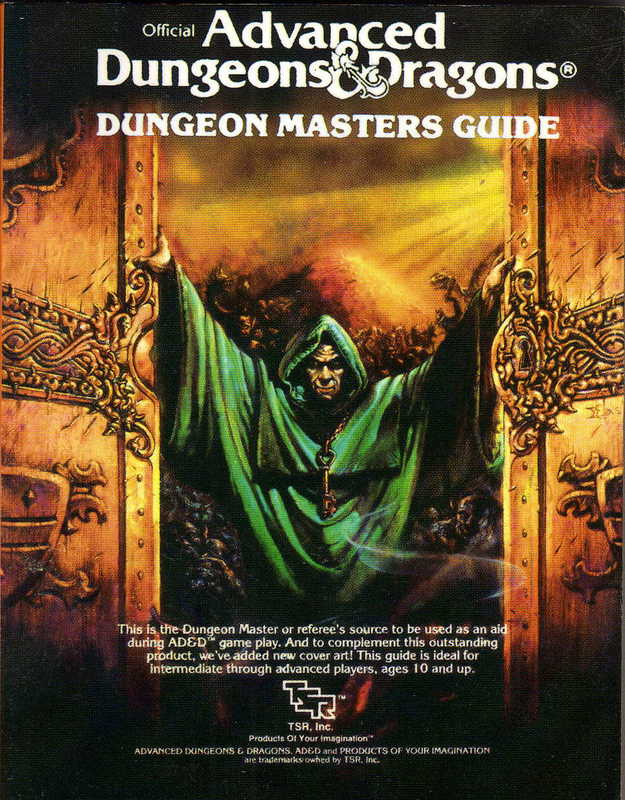
If only there was a guide like this for teaching. 

I look back on those few years fondly. It was a silly time where my imagination ran wild and characters I created could do amazing things. Sadly, I do not quest anymore and rely on Skyrim and other video games to fill the void, but it’s not the same. The more I think about it, all teachers should play D&D before they are allowed in the classroom.

There is a level of creativity in D&D that is unparalleled anywhere else in education. Playing a game that essentially involves paper and 12 sided die requires a tremendous amount of imagination. The Dungeon Master would weave amazing stories that required the gamers to “see” the mythical world around them. When it came time for one of to be the DM, it was an opportunity to show the level of creativity we had gained by playing the game. Creating a world by writing an adventure that people had to participate in is not an easy task. Especially when your friends are counting on you to give them the best experience for the short time you had them. The adventure needs to be tailored to the strengths and weaknesses of everyone involved to ensure a great time for everyone. This is no easy feat, but it needs to be done. There is also nothing better than watching the group overcome all of the obstacles you put in place and come out a little bit better. Creating a successful quest is a bit of rush that I have only duplicated in one other place. Lesson planning.

How is this any different the preparing lessons for the classroom? I’m tasked with creating a learning environment where all of my students attempt to master the content I have given them in a way that engages them and excites them. There needs to be creativity in every lesson that is created and given to the students. The boring lessons stand out and cause problems in the class as the students get restless. Imagination is something that needs to be in the classroom and needs to be imparted to the students. While some teachers might actually feel like Dungeon Masters, it is their job to create a wonderful world of learning for their students.

I always loved surprises when I played D&D. The DM would throw something at us that was unexpected, but could be handled if we thought it though. Critical thinking was a must when gaming. The easiest answer wasn’t always the right one and that forced us to think about situations differently. Evaluating problems, looking at resources and coming to a group consensus were part the game. The feeling of overcoming an obstacle as a group was an amazing feeling. We all knew that the DM didn’t give us something we were not ready for and that is what made certain DMs better than others.

As a teacher, I try to give my kids challenges. I want them to be stumped at first, struggle to find the answer and be stoked when the overcome the obstacle. I feel like that is my job. Kids need to be prepared to face tough challenges and work to solve them. Playing a game that is not challenging is really not fun in the long run. School is no different. Kids might say they don’t like to be challenged, but deep down they want teachers to push them. Providing problems that can be solved with a little effort will have a lasting impact on students and they will be thankful for it in the end.

The group dynamic of Dungeons and Dragons is always interesting. Each member of the group needs to create a character they will use for their adventures. However, an entire group of wizards only will never get very far. Same goes with groups of warriors only or healers only. As a group, a decision needs to be made about the distinct roles everyone needs to play so the team can be successful. Once that hurdle is jumped, group decision need to be made on the different paths the team will make as it attempts to meet the goal of the quest they have undertaken. This is an ongoing part of the game and it does get heated at times. Despite the stress, the team that works together best will always be successful.

The teachers that are the strongest are the ones that work well with others. When teachers get together, they all need to take specific roles and work to their strengths. Collaboration is a skill that does not come naturally to most people. There will be times things get testy, but the goal needs to remain the focus. That goal is helping our students. We have to trust that the people around us are on the same team and want the same things. As a school we are going to be faced with many different obstacles. We have to work together to solve these problems with as little damage as possible. Teamwork is how we can be successful in helping all of our students.

I have learned so much from Dungeons and Dragons. There are some people that avoided this post like it was a Tarrasque. It’s sad that a game that encourages all of these important skills is relegated to the realm of “nerdery”. I owe some of my teaching style and strengths to what I developed during those few years questing. Maybe all teachers should spend a couple of years gaming before they get into the classroom.

Thanks for the time you spent reading this post. I’m off to find my Monster Manual.

NODE in Education - A Review #SciChat


I am happy to introduce to you a very cool gadget I have had an opportunity to play with. Here is a video that provides some detail on what NODE is and then I will tell you all about my experience using it. 


I feel like you never know what you are going to get from a Kickstarter campaign. People are talking about all of the awesome things they will do if they get the money, but then they still have to do them. I've contributed to Kickstarter campaigns before and they have all been cool ideas, but I'm still waiting for the products to be complete. I'm really happy to see the turn around on NODE to be so quick. 

I wasn't sure what to expect when I received the NODE. To be honest, its design seemed too simple to do all of the things it claimed, but it did not disappoint. 

The NODE was easy to set up and link to my iPad. (Note: It is only able to connect to the iPhone 4s and above and the 3rd Gen iPad and above.)

Downloading the free app from the app store was a breeze and the instructions found on NODE's website were east to follow. 

I was able to use the Luma, Clima and Therma add-ons to NODE and each one was very cool. They worked well from my iPad without any delay. Readings were very accurate and the gyroscope was spot on. It was cool to watch me move around the NODE and watch the cube on the app swirl around. The app worked great and I did not see any issues with the app or glitches in general. It worked just how it was supposed to work. 

I was able to control the lights on my Luma add-on from across the room and the reading from Clima and Therma seemed spot on. It is a fun tool to have around the house to keep track of information, provide light when needed and look for possible areas of the house that might be losing heat. 


Here is a nice picture of all of their products.

Here is a good description of NODE's parts

For school, I see this fitting in very nicely in Science classrooms. All of the different features that NODE offers is perfect for all of the different types of Science classes you would see in school. Physics could use the basic KORE for motion and speed, Earth Science and Biology could use THERMA and OXA for measurements and Chemistry could use OXA as well. I could see NODE fitting in very well with the data collection that is standard in Science classrooms. 

Students that have devices that are able to connect to NODE's bluetooth could use one to take their measurements and email the results to themselves. A class devices could also me used so that students working in groups could use NODE to take their measurements and send via email for evaluation. 

The basic KORE is $149.00 and the prices for the additional pieces range from the $25.00 LUMA to the $149.00 OXA. Add to that the price of a Bluetooth device that can connect to NODE, it becomes a pricey gadget for measurements. At the current pricing levels, I do not see NODE as a device a teacher would by a class set of for all students to use, but I could see NODE with all of the add-ons used within a department to be shared at various times. Educational pricing might be able to help get more NODEs in the classroom. 

Overall, this was a very cool gadget that can make taking measurements more interesting for students in the classroom and for the teachers as well. The price might be prohibitive to some, but as a department, I think the purchase would make sense for student and teacher use.